
EFFORTS IN HIGH GEAR TO IMPLEMENT VALUE CHAINS AS WORLD BANK FUNDING KICKS IN TO BOOST FARMERS IN MERU COUNTY
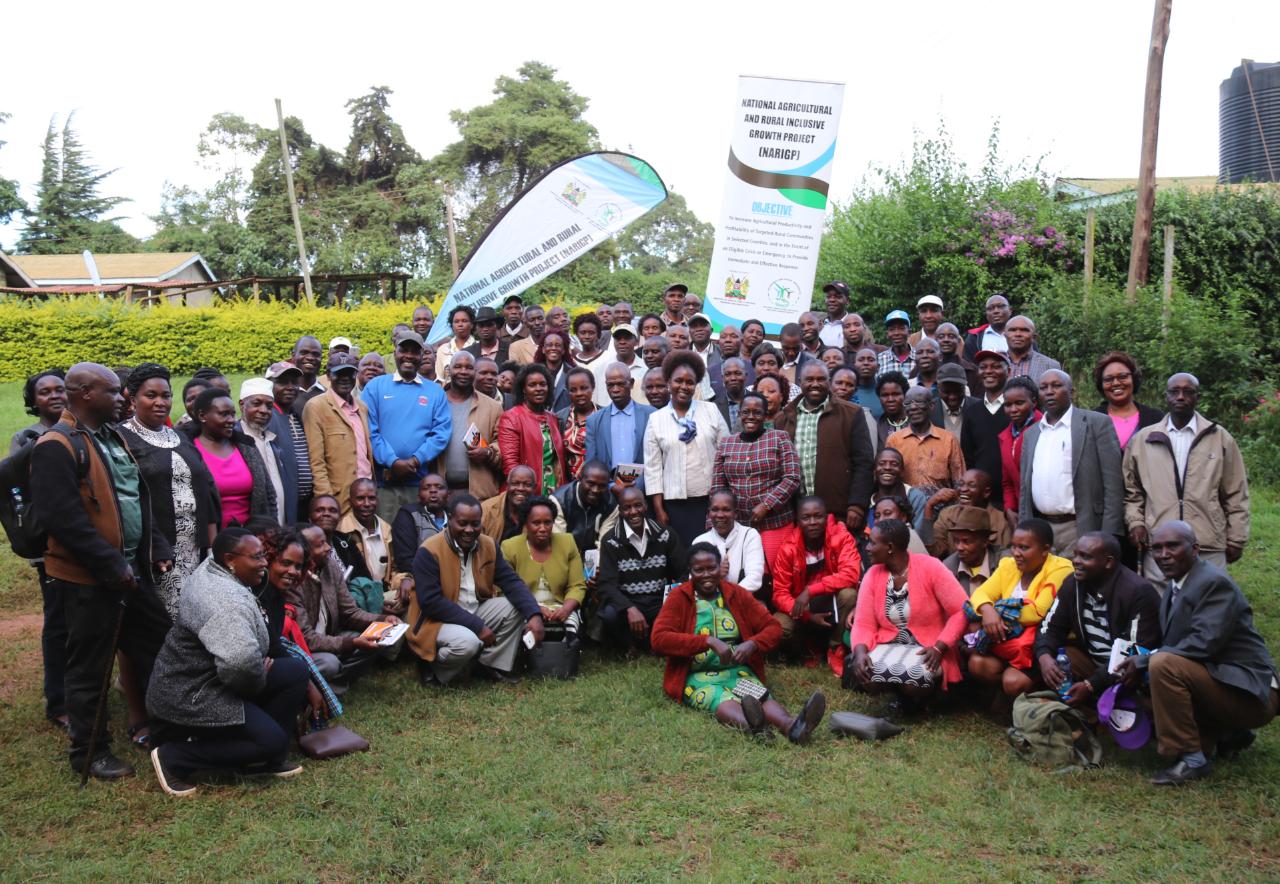
In line with his promise to ‘improve agriculture to ensure food and income for all households’ in Meru County, Meru Governor Kiraitu Murungi’s administration is well on course to implement dynamic and revolutionary programs in the sector, which are expected to ensure that farmers who make up nearly the entire County population, convert the traditionally subsistence agriculture practiced in the County, into a serious business and a profitable venture. Through the National Agricultural and Rural Inclusive Growth Project (NARIGP) which is jointly funded by the County Government of Meru and the World Bank to the tune of Sh970 million, farmers across the County will be organized into Community-Driven Development Committees (CDDCs), Social Accountability and Integrity Committees (SAICs) and the Vulnerable and Marginalized Groups (VMGs) depending on the agricultural zones and the various agricultural activities practiced in the particular regions. The farmers will then be trained on mobilization and utilization of resources available through the funding to ensure maximum profitability through implementation of value chains in crops, namely; the avocado, potatoes, bananas and macadamia, and in livestock and aquaculture.
Stakeholder fora and trainings are ongoing across the County for full sensitization, awareness creation and involvement of all farmers with banana and potato stakeholders fora already held. In Banana stakeholders’ forum, farmers were mobilized for training and capacity building in a move aimed at ensuring that the County realizes its full potential for producing a minimum of 60kgs per bunch from each of the various varieties cultivated, as opposed to the current output of 30kgs per bunch. At the Potato stakeholders’ forum, the problem of proper packaging of potatoes was addressed at length, with County Government committing itself to ensure enforcement of the new potato regulations, especially the 50kg rule to eliminate the previously practised infringement of farmers through unscrupulous excessive packaging locally known as "Mituuru".
Efforts are also underway to ensure infrastructure development and improvement in the agricultural areas to facilitate efficiency in transport and marketing of produce through improvement of roads and construction of modern markets.
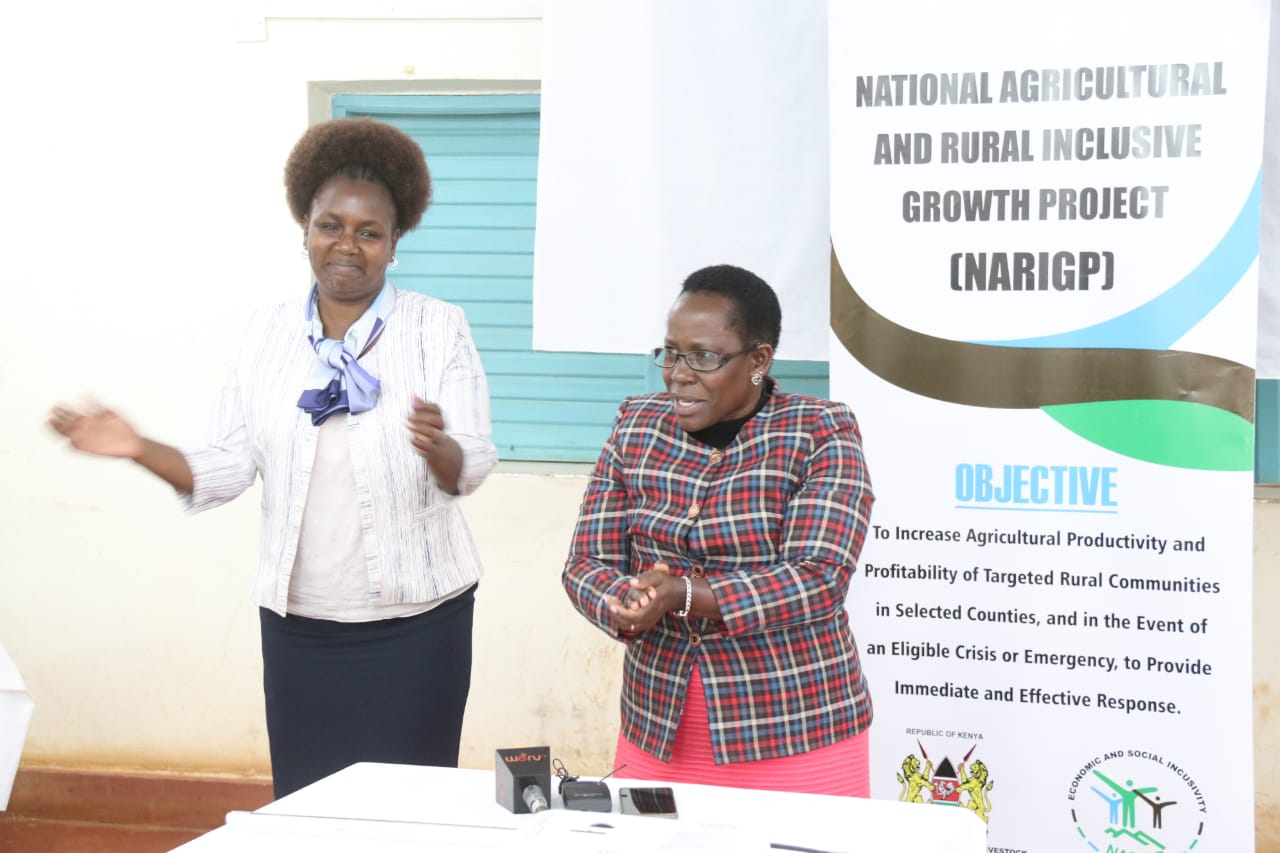
"The Governor has directed that we must ensure our farmers are empowered, protected and appropriately guided so that agriculture in our County brings profit, improved economy and better living standards for our people. We all know that Agriculture is the core economic activity in Meru and we are determined to ensure the farmer is at the forefront, when it comes to reaping the benefits of the sector," Agriculture CEC Member Caroline Mutiga said during the training.
CDDC and SAIC members have already undergone comprehensive training on the implementation of the project to ensure competitiveness and maximum value in the overall outcome by ensuring improved and more profitable agriculture in the County. While the CDDCs will oversee implementation by training and utilizing finances in specific farmer-driven programs, the SAICs will be the oversight authority in ensuring that funds are not misappropriated. The VMGs will be considered to be the beneficiaries across the project, who have no capacity to engage in the specialized and complex specific activities within the NARIGP programs in their communities.
"Our goal is to ensure that the resources in agriculture such as the labor of our people, their farms and capital inputs are optimally utilized to ensure completion of chosen programs and maximum profits for farmers. There is going to be ranking of CDDCs and SAICs across the County because all of you have been equally trained on the project. We want to see the region of our County which comes out decisively as the best in absorption and utilization of the funds," said Agriculture Chief Officer Mrs. Dionisia M’Eruaki at the closure of training for CDDC and SAIC officials.
The project is expected to span over a period of four years and is expected to impact agriculture greatly in Meru.
