
COG CHAIR PRESS STATEMENT ON DEVOLVED COUNTY HEALTH SERVICES.
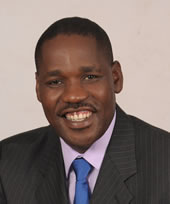 CHAIRMAN H.E GOVERNOR MUNYA PRESS STATEMENT ON DEVOLVED COUNTY HEALTH SERVICES
The Council of Governors has taken note of the issues affecting health raised by media in the last few days. The press has been doing a commendable job in highlighting issues that require urgent attention in all sectors especially the health sector. The problems highlighted in Bungoma give an indication of the problems Counties are grappling with as they deliver care services with very limited resources. However this does not mean that Counties are unable to manage and deliver health care to the Kenyans.
Increased investment
We note that Counties have done a lot of work to improve provision of health care in the last 2 years of devolution. Counties have increased the number of facilities either through construction or opening facilities that were not operational. From reviews undertaken by the Council of Governors, operational facilities have increased by 12% for hospitals and 21% for dispensaries since 2013. Counties have improved maternal services by increasing maternity beds and theaters by 21% and 142% respectively. To address the problem of newborn babies, the number of incubators has gone up by 43%, while Ambulatory services to facilitate referral recorded 100% increase in the last two years.
Counties have also been able to equipment their hospitals with specialized equipment leading to reduction of referral cases to Kenyatta National Hospital (KNH). For example referral to KNH for kidney patients that need dialysis, the referred cases have reduced by 50% from 150 patients to 75 in the last one year. It is important to note that the majority of patients referred to KNH were drawn mainly from Nyeri and Kisii counties respectively. Establishment of dialysis centers in the two Counties have reduced dramatically the patients traveling to Nairobi. Additionally, the two Counties are also subsidizing the cost of dialysis from Ksh. 13,000 to Ksh 4,500 further benefiting kidney patients.
Regarding human resource for health, Counties have increased doctors by 34%. Only last month that 500 doctors including dentists and pharmacists who finished their internships at end of March this financial year were distributed across all the Counties. Indeed it is important to note that for the first time since devolution, Counties have received doctors as per their request. This means that Counties are identifying their needs and filling the positions for doctors as far as the budgetary allocation can allow. To this end, I wish to clarify that no County government has been allocated doctors according to their ethnic background. Indeed some Counties retained some of the doctors that were trained in their health facilities.
. Promotion and upgrading of doctors and other human resources for health has been hindered by the long time the National Government is taking to transfer staff files to Counties. This issue is however being solved and Counties through their Public Service Boards will be able to confirm all staff that are due for promotion.
Medicine and medical supplies
Regarding provision of medicine, the Council notes that Counties have been working with KEMSA to procure their essential medicine and medical supplies in accordance with their needs. The procurement of medicines may not be to the desired levels but this is due to the realities of the limited budgetary limitations facing Counties.
Delayed disbursement of funds by National Government
The Council of Governors notes that delayed disbursement of funds by the National Government impacts negatively on Counties ability to offer services effectively including paying of salaries to health workers. For example, during the current financial year, the National Government has disbursed funds to Counties only twice: 1st tranche was disbursed in November to cover County expenditures for July to August 2014. The 2nd tranche was disbursed in March 30th, to cover County expenditures for the period from November to January 2015. We have only 15 days to the end of the current financial year and six months worth of funds are yet to be disbursed to Counties. This shows that Counties are operating for long periods without funds thus affecting efficiency of service delivery. It is actually surprising that the 9 counties have been able to bring the cholera outbreak under control with the minimal resources they have.
The Health Bill in Parliament
The Council notes that there has been an increase call to revert the devolved health functions back to the National Government. These calls are coming at a time when the health bill in Parliament is due for second reading and the Council of Governors together with other stakeholders including Transition Authority and Commission for the Implementation of the Constitution have raised concerns that the National Assembly has failed to incorporate proposed amendments in the bill provided after the 1st reading that would remove clauses that were in contradiction to the constitution.
The fact that calls to claw back the devolved health functions when Health Bill is before the House is proof that the National Assembly is acting in bad faith. In addition, the National Assembly is on record for fighting against allocation of more resources to the Counties.
We are calling on the National Assembly Committee on Health to convene a consultative meeting between the Council, the Ministry of Health and CIC and other relevant stakeholders to review the Bill and ensure that all stakeholders’ inputs have been captured before the second reading. If the Bill is allowed to pass without consultation, the Council of Governors shall institute proceedings for the same to be nullified.
Finally, it is worth noting that the Council of Governors is concerned that CIC’s term is coming to an end in August and no sign of Parliament attempts to put in place an independent institution that will entrench devolution. Other countries like Canada that have devolved have in place sustainable institutions that oversee and protect devolved functions. There is need to move quickly and put in place such an institution to safeguard devolution.
ENDS.
